The public outcry in response to Clippers owner Donald Sterling's now infamous, racist diatribe has been fierce. Initially, I reacted similarly to how I imagine most decently-educated middle class white folks did: I shook my head and became self-righteously indignant that someone, particularly someone associated with basketball, would say such things. This was yet another reminder, I thought, that racism is still alive and well in America, particularly among old, rich, white dudes.
I realized this because it was much, much more mundane than I expected. It was more subtle than I had imagined. I kept waiting for Sterling to shout "I just can't stand black people!" or to use the dreaded -ER variety of the N-word. Those overt expressions of exceptionally racist ideology never appeared as I listened to the conversation in question. Instead, Sterling remained mostly calm. He sounded...tired...as he tediously explained to V. Stiviano, his mixed black and latino mistress, why he just REALLY wished she wouldn't advertise publicly that she associated with black people. The conversation ended, and I looked to my girlfriend Sarah who was listening along with me. We both felt the same thing: that wasn't as...bad...as I expected. Again, we were right. It was worse.
 |
| V. Stiviano |
It was worse because that 9 minute conversation, now responsible for the first ever lifetime ban of an NBA owner, is not unlike so many conversations that take place behind closed doors across America each and every day. In his own words, Donald Sterling "has NO problem with black people." He just doesn't want anyone to know that his mistress (his black mistress) makes a habit of spending her free time around them. That's not THAT bad...right?
No. It's bad. It's completely unacceptable. And for once, it was handled appropriately. That's really the best that can be said for the punishment Sterling was dealt. It was appropriate. Anything more than that and the actual significance of this whole ordeal in the "fight against racism" becomes grossly overstated. Why?
Because we live in a society that has black inferiority deeply ingrained in the fabric of its culture, and the outing of one old-school racist curmudgeon doesn't do much to change that. Sterling's words do present us, however, with a glimpse of what lies at the foundation of modern racism: a double standard. In my mind, the most troubling aspect of our society's double standard when it comes to black people, is that our subtle declarations of their inferiority go unnoticed a shocking majority of the time. It's not so much that we are in great denial of our racism. Instead, we have become so accustomed to it being woven into our ways of thinking, speaking, and decision-making, that we no longer even detect it. But it is there.

White parents are often fine with their son or daughter hanging out with black friends, but when they find out that daddy's sweet little girl is dating a black boy, all hell breaks loose. Donald Sterling is fine with black people, but he doesn't want his mistress seen attending Clippers games with them. Suburban soccer moms chatter back and forth complaining about how loud and annoying the African-American (this part is whispered) woman at the nail parlor was.
As an aside...let me just take this opportunity to clear something up for white people: You are not going to offend a black person by calling them black. Nothing screams timid caucasian ignorance more than always carefully referring to black people as "African-Americans." For one, black people aren't ALL African-American. They might be Cuban-American or Jamaican-American etc. So just be cool, and say you saw a black guy. He's cool with that. Everybody's cool with that.
In so many white conversations about neighborhoods or apartment complexes, the unspoken (or sometimes spoken) understanding is that, those "not-so-nice apartments" or those "rough" neighborhoods are basically places-where-a-bunch-of-black-people-live-so-don't-go-there.

Sarah is taking a class at UCLA this summer about the cultural history of rap music. When some white people ask me what classes she is taking, I simply respond with, "a cultural history class." Why? Because I don't want to deal with that uncomfortable look of misunderstanding and disapproval that will undoubtedly spread across their face. I know to expect this because I took multiple black culture classes myself at Duke, and learned the hard way that it is just not worth explaining them to some white people. I think this might be the closest I will ever come to feeling black shame. The fact that I would have to explain the value of those courses at all proves my point: Many of these sentiments regularly thought and expressed by white people are not overtly racist. However, they ultimately establish black people, their generalized tendencies, and their culture as inferior.
Even when the words of white people are supportive of their black counterparts: "I love black people!" or "I'm not racist, I have black friends!" (A statement that essentially means "Hey look, I'm racist!"), they often belie an underlying lack of respect.
Unfortunately, the true expression of our modern devaluation of blacks lies not in our words, but in our actions. Many of us truly do not have any conscious prejudice towards blacks, and as such we never express any. We may even be a voice against racism, and we MIGHT even post a Facebook status about how great it is that Donald Sterling got a lifetime ban for what he said! How cunning! What activism.
Truly though, what we cannot ignore is the reality that for decades since the Civil Rights Movement as well as long before, black Americans have been suffering injustices created by those in power (rich people, white people, rich white people, me,
you if you're white and/or middle class or above, Donald Sterling, Michael Jackson once he became white, etc). When injustices go unnoticed for long periods of time, they become systematic, and when they become systematic, they become very, very difficult to correct.
This is why we all turned into NAACP members when we heard about Sterling's racist comments, but did nothing in 2003 and 2006 when he faced lawsuits for housing discrimination, an offense far worse than any comment in a private conversation.
 |
| Bomani Jones |
ESPN analyst Bomani Jones exquisitely expressed his frustration with this disparity in a radio interview shortly after the story broke. If you can spare the ten minutes, it is certainly worth the listen.
"The charges made against Sterling were stomach-turning. In response to the 2003 suit, one of his property supervisors testified that Sterling said all blacks "smell" and are "not clean," that he wanted to "get them out" of his properties to preserve his image, and that he harassed tenants and refused to make repairs until they were forced to leave, according to depositions obtained by ESPN The Magazine.
But as alarming as the claims against Sterling are, housing discrimination as a practice is alive and well in America, and can't be solved with something as simple as a lifetime ban.
'For individuals and families, it limits their housing choices, it dictates where you can and cannot live, and that means limited access to other opportunities: educational opportunities, employment opportunities, health care services, other amenities," Fred Freiberg, director of the nonprofit Fair Housing Justice Center, told HuffPost. "It sustains and enforces patterns of racial segregation and poverty concentration, and it creates a whole host of inequalities that we could, frankly, do without.'"
Though housing discrimination just one example, it captures the concept of systematic oppression in a nutshell. I don't even think I completely understood the concept until I lived in Durham, NC for 5 years. Shortly after graduating from college I became friends with Damien Lee, who grew up in oft-feared-by-Duke-students East Durham. I soaked up as much of his knowledge of Durham history as I could, and appreciated his perspective on it as a black man from one of "those bad" neighborhoods. I had lived in Durham for over 4 years when I met Damien, and he was the first person to ever mention "Black Wall Street" to me. I believe that speaks volumes to the common disconnect between white wealth and black culture and history.

As it turns out, in the early 1900's, Parrish Street in downtown Durham became the home of several prominent black-owned companies. While Jim Crow-era struggles raged on in other areas of the country, Durham developed one of the most thriving black communities in the nation. Many of these black residents lived in the Hayti community that bordered Parrish Street. For a decent portion of the early 20th century, this "Black Wall Street" served as a bustling hub of black business activity. Then, in the 1960's, Durham went through a period of "urban renewal." Already past its hey-day, the Hayti community/Parrish Street area was dealt a devastating blow when the Durham Freeway was built directly through it. In many ways, this was a death sentence for the once-thriving "Black Wall Street," in the name of "progress." Since that time, Durham has seen continued renewal of its downtown areas, vacated in the wake of the era of tobacco prosperity.
I have myself enjoyed this updated, hipster-attracting Durham with its many independent restaurants, micro-breweries, and artistic elements. I have visited several of these newer establishments with Damien, where together we pondered the juxtaposition of modern hipster-Durham against the old thriving hub of black activity from the past. The answer to which is better, I presume, lies in the eye of the beholder.
Durham's story is not vastly different from that of many other American cities. With LA's large minority populations, episodes of housing discrimination like Sterling's are not uncommon. In Chicago, white-flight, gentrification, and housing discrimination have combined over decades to produce deadly results. Basically, as blacks moved into to the city, whites moved out, because A. They could afford to establish themselves in suburban areas and commute into the city for business, and B. They didn't want to live near black people. Freeways were built, intentionally bypassing black neighborhoods and leaving extremely poor black communities isolated and with few opportunities for growth and development. Over the last decade, the results have only worsened, and south side Chicago has become much-maligned "Chiraq." The nickname is an ode to the middle-eastern country where fewer Americans were killed in 2012 than in Chicago (532).
 |
| Keith Cozart - Better Known as Chief Keef |
Chiraq's most famous resident, Chief Keef, has become the public face of the violent lifestyle of the south side. To get some sense of what life is like as a 17 year-old in this part of town, look no further than the
music video for "I Don't Like." Normally music videos are caricatures of reality. In this case, my gut tells me that this is not far from a typical Friday night in Englewood, where children grow up fatherless and trapped by a system that has failed them. In a
brilliant documentary about Chief Keef's rise to stardom produced by Noisey.com, you get a sense of the wild-west type environment communities like these have become.
Countless news reports have berated Keith Cozart as a glorifier and promoter of everything that is wrong with violent inner-city Chicago. I don't completely disagree with that ideology, but I believe that his reality is more nuanced than that. Since signing his major label record deal with Interscope, Keef has moved to a northern suburb of Chicago.
(As chronicled in the last episode of the Noisey documentary...his current situation actually makes for wonderful comedy, as extremely wealthy white people power walk their strollers past his house on the sidewalk, where he rides four wheelers around his front yard with his homies...they are literally the only black people for miles).
He, like everyone else on the south side, does not like living there, and certainly would not choose to if given other options. The reality is few of them are given other options. It seems easy to argue that with hard work, ambition, and focus, any of them could make it out. I believe this is idealistic, and that if any of us had grown up there, we would find that point significantly more difficult to argue. Try surrounding yourself with bad living conditions, bad schools, and bad people, and see if you make it out. The American Dream looks different in different places.
So all of this begs the question: Can the entire plight of blacks in America be blamed on the "white man?" Not exactly.
I recently watched "12 Years a Slave" with Sarah, and found it to be one of the most disturbing, informing, moving, convincing films I have ever seen. As we discussed it, we agreed that the one thing the film did most excellently was subtly capture the prevalence of the slave mentality among blacks in the south. These people were oppressed so severely for so long that they started to understand their own existence through the lens of enslavement. For those born as slaves, that world was all they knew. Their goal became submission. Put simply, they began to accept their position as inferior to their white owners and drivers. This is why educated slaves were so feared by owners, because education, or an understanding of the potential for life beyond the oppression of the fields, was among the ingredients of rebellion. A slave mentality kept slaves from even developing the desire to rebel.
 |
| One of Many Memorable Scenes in "12 Years a Slave" |
Much has been written about whether or not there are remnants of a slave mentality among some blacks in America today. I do not believe anything such as this exists to the degree that it would deserve to have the word "slave" attached to it...simply out of fearful respect for how horrendous that institution was. But, I do believe that some blacks today unintentionally help propagate the underlying modern idea of black inferiority. It is not fair, but it is reality, and it is the type of thing that visionaries like Spike Lee have dedicated their lives to fighting. At present, one of the greatest battles that black people fight is a against stereotypical perception. For example the idea that black people, particularly black males, are dangerous certainly exists today. The ideas that black people are simpler, less intelligent, hypersexual, less reliable, wasteful, and less driven than white people still exist as well.
Unfortunately black people, often those in the public eye, do not always act in ways that work against those horrible stereotypes. Some rappers do glorify violence, extravagance, and misogyny. Some black comedians, like Kevin Hart and Tyler Perry, make millions off of making fun of the most stereotypical aspects of their own people. I recently read a
Gawker article that pointed to Kevin Hart's line in "Ride Along" when two white kids are fighting in a high school lunchroom: "You're WHITE!, You're WHITE......You don't FIGHT!" The writer pointed out how subtly yet clearly this simple (admittedly funny) line once again reinforces age-old stereotypes of blacks as ultimately savages and whites as sophisticated elites.
 |
| Spike Lee - Film Legend |
Advocates for realistic black representation like Spike Lee and Bill Cosby feel that in order to come back from decades of negative stereotyping, blacks must eliminate any and all forms of "tomfoolery" from their culture, including but not limited to Soulja Boy songs, Tyler Perry sitcoms, and
Allen Iverson press conferences. Culturally conscious blacks often lament the existence of BET, at least in its current format, because it really only presents a media-influenced and incomplete version of black entertainment. I once heard a black comedian reference Maya Angelou's famous poem, saying "BET is why the caged bird is still in the cage!" I thought it was hilarious and sadly a bit true.
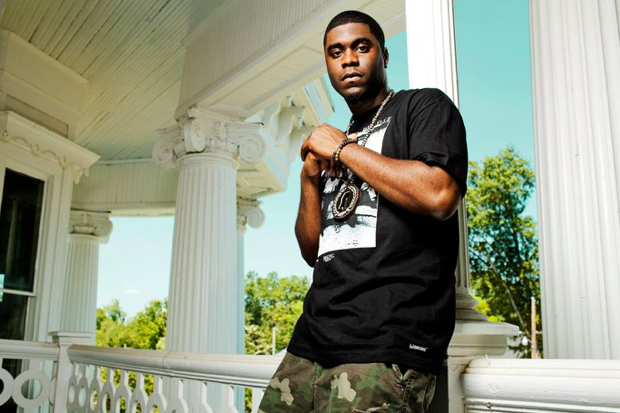
I have met Spike Lee, and conversation with him only made me more confident in his genius. I understand the desperation of people like him. Still, I have a dream that one day white people can listen to Rick Ross without thinking all black people want to be 400 pound BAWSES that drive Maybachs. Personally, I love Ricky Rozay because he is an incredibly consistent artistic character, his music makes me feel like I'm in some epic gangster film, his ad-lib grunt is legendary, he owns Wing Stop franchises and routinely works rhymes about "Lemon-Pepper" seasoning into songs, and he is just a downright good rapper from a technical standpoint. He IS something like 400 pounds, owns it, never wears a shirt, is fully tatted, and resides in the image at the top of this blog for all the reasons above.
 |
| Rick Ross *Image NOT Representative of the Lives of All Black People. |
It only takes a little bit of education, exposure to black people, and/or conscious thought to realize that no Rick Ross song or Kevin Hart standup routine is truly representative of even a minority of the black population. Unfortunately, many white people lack enough of one of these three pieces of the equation that they either consciously or subconsciously form their understanding of what black people are really like based on these stereotypes. A culture of misunderstanding develops. The results are purses grasped a bit tighter when black teens approach at the mall, low representations of blacks among students enrolled at universities, and worst of all, situations like the one in which Trayvon Martin found himself shortly before he was killed. The reality is we live in a world where black people rarely get the benefit of the doubt.
I do not completely blame "white people" as a general population for this lack of understanding. In some ways it seems like, more than anything, it is just an unfortunate byproduct of overall human depravity. But, we as a majority people could be doing a LOT more to build bridges instead of walls.
So the question arises...are there solutions? Can the deep-seated white superiority complex and resulting black inferiority complex be destroyed, or at least mollified? I believe the problem itself leads us to an answer that at least gives us hope. The problem is that over decades and centuries those in power have carried out a systematic devaluation of certain human beings in comparison to other human beings. For the solution I turn to the one man who taught throughout his life that every human being has unimaginable values in the eyes of God: Jesus Christ.
Now I don't mean this in the cheesy, Jesus Christ will save the day, let's just all pray about this a lot way. After all, I have been pretty frustrated with many Christians lately because of the way we have handled several "hot topic" issues. I see instead Christians as a solution through our potential to live our lives based on the radical example that Jesus set, particularly with respect to his ministry to those on the margins of society. As a white person, it is uncomfortable to admit this, but in many ways black people still live on the margins of modern American society.
The good news is, over time, progress HAS been made, and we have reason to be optimistic. I recently read an outstanding
Rolling Stone interview with Bill Gates that included the following excerpt:
 |
| Bill Gates |
RS: What do you say to people who argue that America's best days are behind us?
BG: That's almost laughable. The only definition by which America's best days are behind it is on a purely relative basis. That is, in 1946, when we made up about six percent of humanity, but we dominated everything. But America's way better today than it's ever been. Say you're a woman in America, would you go back 50 years? Say you're gay in America, would you go back 50 years? Say you're sick in America, do you want to go back 50 years? I mean, who are we kidding?
 |
| Rev. Dr. MLK Jr. - Leader, Visionary, Martyr |
I could not agree more with Gates here, and am admittedly a bit of an eternal optimist myself. Why? Because I believe that, in the words of Dr. Martin Luther King Jr., "The arc of the moral universe is long, but it bends towards justice." He actually borrowed that quote from 1850's abolitionist Theodore Parker. If an abolitionist can share those words of wisdom in 1850, I think I can get behind them now.
Still, for all the reasons mentioned earlier in this post, work needs to be done. Though it is a bit abstract, I truly believe the first step towards reconciling the problems at hand is reversing the systematic devaluation of black people in America. Notice I specifically said reversing the systematic devaluation. The problem is not people feeling hatred towards black people, so the solution is not removing hatred from people's hearts. The solution is establishing a new value system when it comes to human beings.
This is where I turn to my faith, because I think true disciples of Jesus Christ might be the only people radical enough to completely value all people equally. Here's why this is radical: valuing all people equally means recognizing that their well-being is equally important regardless of their race, gender, sexual orientation, criminal history, religious beliefs, financial situation, racist tendencies, skills, work-ethic, generosity, health, sense of entitlement, accomplishments, and on and on and on. Really think about that. If you're like me, even a few of those I just mentioned make it difficult to value some human beings as much as others. The reality is we are not perfect, and we will be judgmental. But we can remind ourselves that God values all people, ALL people, the same. Jesus ministered to the least of these. Many of our society's decisions have reflected the reality that we think that black people are the least of us all. They are not. In fact in some ways we all are because of how we have failed to treat all people equally. That, to me, is incredibly humbling.
I believe the second step towards reconciliation might be the removal of fear. Much of our decision making that has led to decades of oppression has been based on fear: "That neighborhood scares me. I might get robbed there. I might get killed there. My family might get killed there. Let's just build the freeway through there so we never have to stop there." Or worse, and more embarrassing: "The idea of not living comfortably scares me. I want to live in a neighborhood where everyone looks like me. Black people make me uncomfortable, so I am afraid to hang out with them. I am afraid of what people will think if my child dates a black person. I am afraid of what people will think if there are pictures on Instagram of my mistress with black people."
I am not saying that all of these are irrational or unjustified fears (well, the Sterling one certainly is). I am as guilty as anyone of facing several of those fears listed above. I don't think it is wrong to keep yourself and your family safe. This is an imperfect, dangerous world, and I believe that God wants us to live safely and happily. But, I also think that radically trusting in the hope of Jesus Christ and the truth that he has conquered everything this World can throw at us can help reduce our fears. And when our fears are reduced, we are freed to do more reconciliation.
In a Facebook message with Damien a while back, I asked what he thought some solutions might be to some of the systematic injustices agains blacks in our society:
Problem solved! Not really, but it would be a start if we began using our votes in local elections to support candidates whose policies leaned towards improving the balance of resource distribution to favor lower-income areas. I know that politics are incredibly complex, and I am not naive enough to believe that this is an overarching solution. But I also know that, particularly in affluent areas, white populations tend to geographically and financially isolate themselves from poorer, often blacker communities nearby. Combining these types of selfless policy changes with activism at the individual, church, and community level might actually make a difference.
This type of activism takes courage. MLK and Malcolm X died for their cause. I am, admittedly, not sure I personally feel called to take a vow of intentional poverty, move into inner-city Atlanta, and begin a grassroots campaign to reconcile racial discrimination. The idea of doing something like that terrifies me, and it does not sound like a comfortable life. Coincidentally, those are two of the exact obstacles to progress that I mentioned earlier. So I am stuck like the rest of us. Or am I?
I think God intends to use us all differently. Perhaps someone else will feel called to be the type of activist I mentioned above. If I meet someone who is, they will have my full support. For now, I feel called to love and minister to the youth of my church which is in admittedly a very white, very upper middle class Georgia town. But people with a reconciliation vision in mind need to be in communities like mine as much as they need to be anywhere else. I love my church, its congregation, its staff, and my youth. I hope I can teach them to love and respect and appreciate the value of all people, the way Jesus Christ did.
I pray that in the end, this Donald Sterling fiasco will serve as another moment of progress towards a future defined by equality rather than inferiority.